
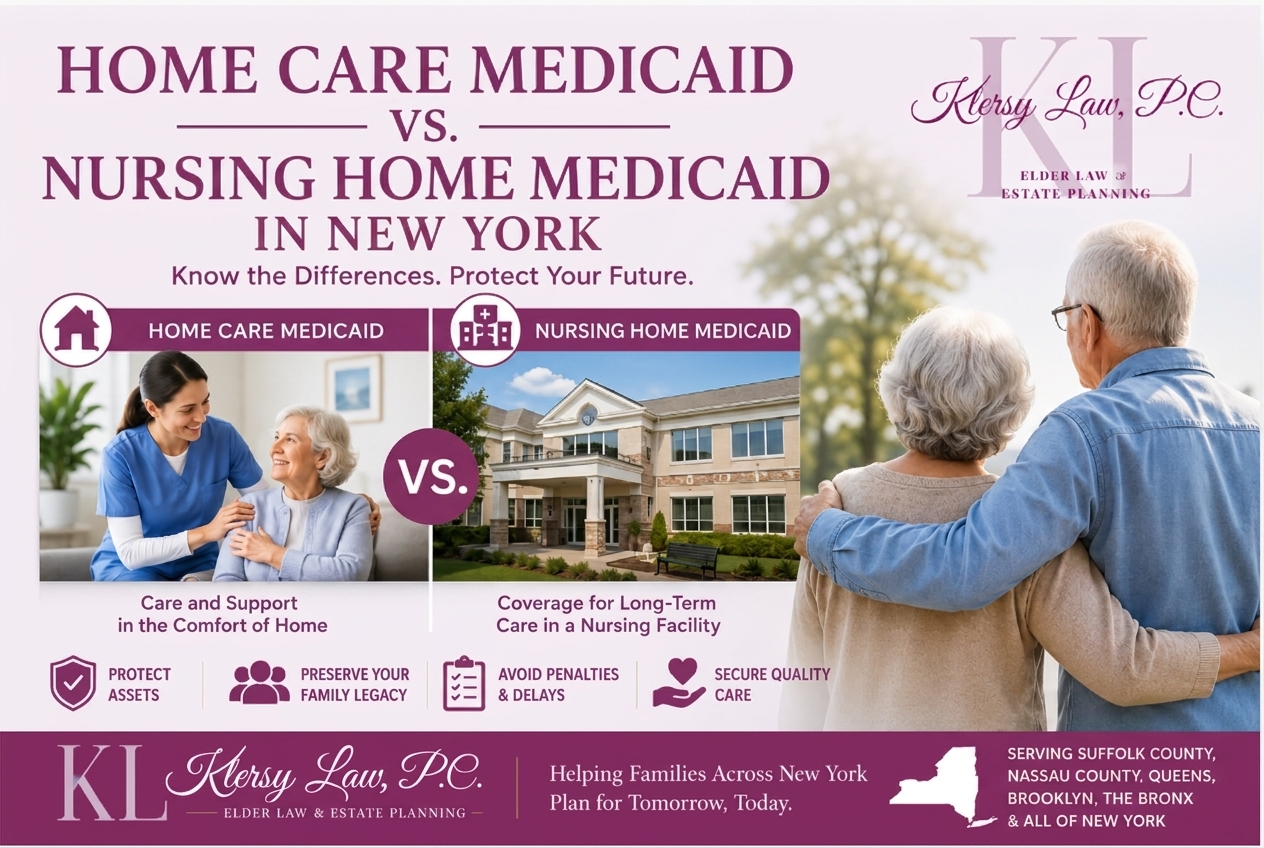
Understanding the Difference Between Home Care Medicaid and Nursing Home Medicaid in New York
Home Care Medicaid vs. Nursing Home Medicaid in New York: What Families Need to Know
When families begin exploring long-term care planning in New York, one of the most common misconceptions is that all Medicaid programs are the same. In reality, Home Care Medicaid and Nursing Home Medicaid are two distinct programs with different eligibility rules, financial requirements, and planning strategies. Understanding the difference between these programs is critical for protecting assets, securing quality care, and avoiding unnecessary financial hardship.
At Klersy Law, P.C., we regularly assist families throughout Suffolk County, Nassau County, Queens, Brooklyn, Bronx County, and across New York with Medicaid planning, elder law, estate planning, and asset protection strategies designed to help families navigate the rising cost of care.
Whether your loved one wishes to remain safely at home or requires skilled nursing care, understanding the differences between Home Care Medicaid in New York and Nursing Home Medicaid in New York can help your family make informed legal and financial decisions.
What Is Home Care Medicaid in New York? 🏡
Home Care Medicaid New York is a government benefits program that helps eligible seniors and disabled individuals receive care services while remaining in the comfort of their own homes. This program is often ideal for individuals who can still live independently but need assistance with daily activities.
Home Care Medicaid may help cover:
- Home health aides
- Personal care attendants
- Assistance with bathing and dressing
- Meal preparation
- Housekeeping assistance
- Medication reminders
- Skilled nursing services in the home
- Consumer Directed Personal Assistance Program (CDPAP) services
For many families, aging in place is preferable to institutional care because it allows loved ones to maintain independence, familiarity, and dignity.
Home Care Medicaid Eligibility in NY
To qualify for Home Care Medicaid eligibility in NY, applicants must generally meet both:
- Medical eligibility requirements
- Financial eligibility requirements
Applicants typically must demonstrate that they require assistance with activities of daily living while also remaining within New York Medicaid income and asset guidelines.
One of the most important distinctions is that New York currently does not impose a five-year look-back period for community-based Home Care Medicaid applications. This creates important planning opportunities for individuals who may not have completed advance Medicaid planning years earlier.
However, Medicaid laws frequently change, and families should consult with an experienced Medicaid planning attorney NY before transferring assets or submitting an application.
What Is Nursing Home Medicaid in New York? 🏥
Nursing Home Medicaid New York provides financial assistance for individuals who require placement in a skilled nursing facility due to advanced medical, physical, or cognitive limitations.
This level of care is often necessary when someone requires:
- 24-hour supervision
- Skilled nursing care
- Dementia or Alzheimer’s supervision
- Extensive mobility assistance
- Rehabilitation services
- Ongoing medical monitoring
The cost of nursing home care in New York can exceed $15,000 per month, making Medicaid asset protection New York planning extremely important for families attempting to preserve savings and property.
Understanding the Nursing Home Medicaid Look-Back Period
Unlike Home Care Medicaid, Nursing Home Medicaid includes a strict five-year look-back period. During the application process, Medicaid reviews financial transactions made within the sixty months prior to the application date.
If Medicaid determines that assets were transferred for less than fair market value, a penalty period may be imposed, temporarily preventing Medicaid coverage.
Examples of transfers that may create penalties include:
- Gifting money to children
- Transferring real estate improperly
- Adding children to deeds without proper planning
- Selling assets below market value
This is why proactive Medicaid trust planning New York and long-term care planning NY are so important.
Key Differences Between Home Care Medicaid and Nursing Home Medicaid
1. Level of Care
Home Care Medicaid New York supports individuals who can safely remain at home with assistance, while Nursing Home Medicaid New York is designed for individuals requiring institutional long-term care.
2. Look-Back Rules
One of the biggest differences is that Nursing Home Medicaid currently includes the five-year look-back period, while Home Care Medicaid in New York presently does not.
3. Financial Eligibility and Asset Protection
Each program has different financial rules, and the planning techniques used may vary significantly. Common Medicaid asset protection strategies may include:
- Irrevocable Medicaid trusts
- Spousal refusal strategies
- Caregiver child exemptions
- Income planning
- Asset restructuring
- Long-term care asset protection planning
Proper planning may help families protect assets from nursing home costs while preserving eligibility for benefits.
4. Emotional and Lifestyle Considerations
Many seniors prefer receiving care at home because it allows them to maintain routines, independence, and stronger emotional well-being. However, some individuals require the increased supervision and medical support available through skilled nursing facilities.
Why Medicaid Planning Is So Important
Far too often, families delay discussing long-term care planning in New York until a medical emergency occurs. Unfortunately, waiting until a crisis develops can limit legal options and create substantial financial stress.
Early Medicaid planning for seniors NY can help families:
- Preserve savings
- Protect the family home
- Reduce financial stress
- Avoid Medicaid penalties
- Plan for future care needs
- Accelerate Medicaid eligibility when needed
Even families already facing a nursing home placement may still have planning opportunities available through experienced elder law attorneys in New York.
How an Elder Law Attorney Can Help
Applying for Medicaid is far more complex than simply completing paperwork. A knowledgeable elder law attorney Suffolk County, Nassau County Medicaid planning attorney, or Medicaid lawyer near me can help families understand the legal, financial, and strategic issues involved.
An experienced elder law attorney may assist with:
- Medicaid applications
- Medicaid crisis planning
- Medicaid trust planning
- Asset protection planning
- Guardianship matters
- Estate planning coordination
- Long-term care planning
- Nursing home planning
- Home care planning
At Klersy Law, P.C., we are proud to serve families throughout Long Island and New York with compassionate guidance and personalized legal strategies.
As a trusted Long Island elder law attorney and New York elder law firm, our goal is to help families understand their options and create proactive plans that protect both loved ones and lifelong savings.
Contact Klersy Law, P.C.
If you have questions regarding:
- Home Care Medicaid New York
- Nursing Home Medicaid New York
- Medicaid asset protection
- Medicaid trust planning
- Long-term care planning NY
- Protecting assets from nursing home costs
- Elder law and estate planning
Contact Klersy Law, P.C. today to schedule a consultation.
📍 Proudly serving families throughout Suffolk County, Nassau County, Queens, Brooklyn, Bronx County, and surrounding New York communities.